Tree-Climbing Lions: Africa's Most Extraordinary Wildlife Secret
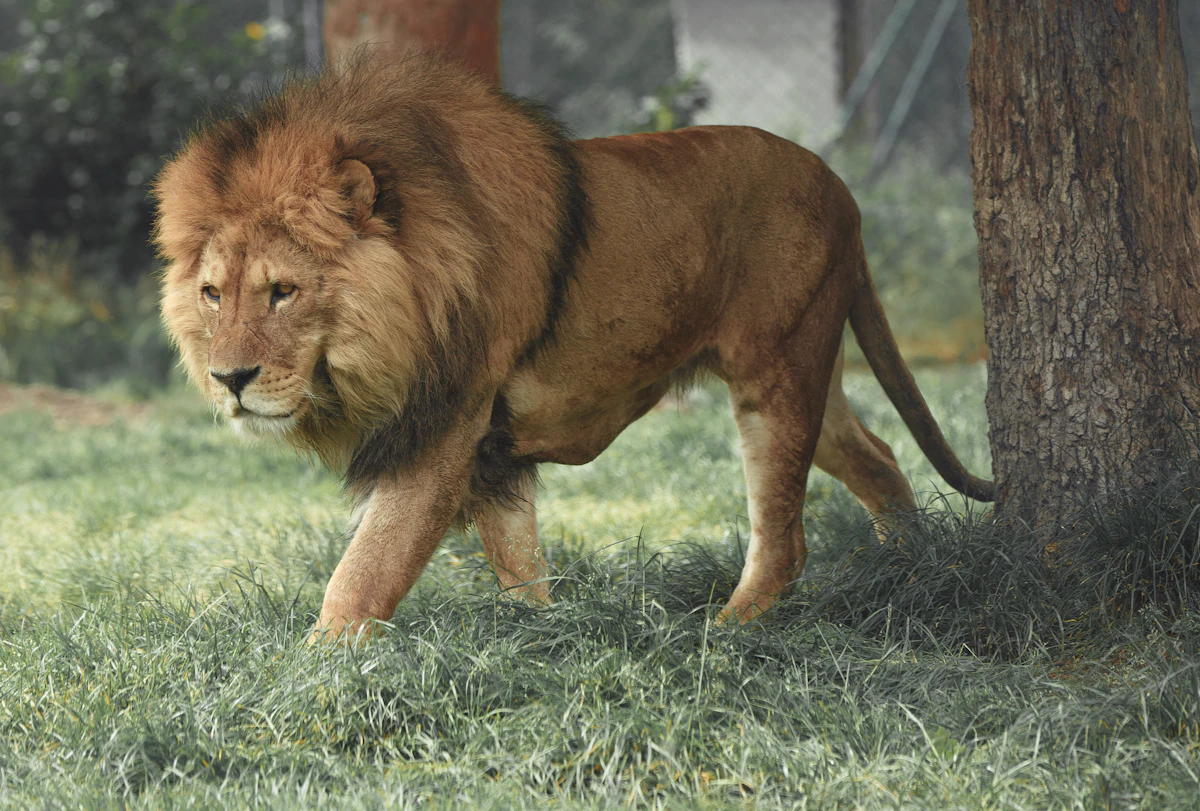
In two rare corners of East Africa — Tanzania's Lake Manyara and Uganda's Ishasha — lions do something no other lions on Earth regularly do: they climb trees. Discover the science, the mystery, and where to witness this once-in-a-lifetime spectacle.
The Lion That Defied Expectation
Lions are the undisputed kings of the African savanna — built for power, speed, and ground-level ambush. Their muscular, heavy frames and large paws are designed for sprinting and wrestling prey, not scaling vertical trunks. Yet in two extraordinary places on the East African continent, lions regularly abandon the ground entirely and spend their days lounging in the canopy of ancient fig and acacia trees, sometimes 6 to 10 metres above the earth.
This is not legend or safari folklore. It is a documented, scientifically studied behaviour that has fascinated researchers, photographers, and wildlife enthusiasts for decades — and one that remains one of Africa's most sought-after and elusive wildlife encounters.
Where in the World Does This Happen?
Tree-climbing behaviour in lions is documented in only two places on Earth with any consistency:
- Lake Manyara National Park, Tanzania — Made famous by the legendary conservationist and writer George Schaller, who first documented Manyara's tree-climbing lions in the 1960s. The park's dense groundwater forest and ancient fig trees along the rift escarpment provide the perfect setting.
- Ishasha Sector, Queen Elizabeth National Park, Uganda — The Ishasha lions are perhaps the most famous tree-climbers in Africa today. Here, prides regularly drape themselves across the sweeping branches of massive fig trees (Ficus natalensis) in the southern sector of the park, visible from the road in extraordinary numbers.
Occasional tree-climbing has been observed elsewhere — in Ruaha National Park in Tanzania and in parts of Botswana's Okavango Delta — but nowhere does it occur with the frequency, consistency, and cultural entrenchment of Manyara and Ishasha.

Why Do They Do It? The Science Behind the Mystery
Despite decades of research, scientists have not reached a single definitive explanation for why these lion populations developed this arboreal habit. Several compelling theories exist — and the truth may lie in a combination of all of them:
1. Escaping Insects
The most widely accepted theory is that the behaviour evolved as a response to the relentless torment of biting flies, particularly tsetse flies and buffalo flies, which swarm in great numbers at ground level in the humid, forested environments of both Manyara and Ishasha. Above a certain height, the flies thin out considerably. A lion resting in a tree at 6 metres experiences significantly less insect harassment than one lying in the grass below — a powerful incentive for an animal that may rest for up to 20 hours a day.
2. Thermoregulation and Cool Breezes
In the dense, humid groundwater forests of Lake Manyara, temperatures at ground level can be oppressively hot and still. The trees, however, catch cooling breezes that don't reach the forest floor. Tree-resting may simply be a practical adaptation to the microclimate of these specific ecosystems — a behaviour that makes life more comfortable for a large predator that needs to conserve energy for nocturnal hunts.
3. Elevated Vantage Points
Lions in open savanna rely on height to spot prey and rivals at distance. In densely vegetated areas, a tree provides the perfect surveillance platform — allowing a pride to monitor the movements of buffalo herds, spot approaching threats, and assess hunting opportunities across a wider area than ground level affords.
4. Avoiding Buffalo Aggression
Both Manyara and Ishasha support enormous African buffalo herds — some of the densest buffalo populations on the continent. African buffalo are highly aggressive toward lions and will actively charge and mob them. Some researchers suggest that retreating into trees is a defensive strategy that lions in these buffalo-heavy ecosystems have learned across generations — a way of resting peacefully without risk of being trampled or gored.
5. Learned Cultural Behaviour
Perhaps the most fascinating explanation is the simplest: cubs learn it from their mothers. In both Manyara and Ishasha, tree-climbing is a pride-specific cultural behaviour. Cubs that grow up watching their mothers climb naturally learn to do so themselves. Prides in the same park that don't have this tradition rarely climb at all. It is, in effect, a form of animal culture — behaviour passed down not genetically, but socially, from one generation to the next.

Lake Manyara: Tanzania's Tree-Lion Sanctuary
Lake Manyara National Park is a compact but phenomenally diverse park nestled between the Great Rift Valley escarpment and the alkaline waters of Lake Manyara itself. At just 325 square kilometres, it is one of Tanzania's smaller parks — but its biodiversity punches well above its weight.
The park's groundwater forest, fed by underground springs seeping from the escarpment, is dominated by enormous fig trees with sprawling, horizontal branches — the ideal architecture for a resting lion. The park's resident prides have used these trees for so many generations that the behaviour is now deeply embedded in their social culture.
Beyond the tree-climbing lions, Manyara is famous for its vast flocks of flamingos on the lakeshore, large elephant herds that move through the forest with surprising silence, and one of the continent's highest hippo densities in the lake's shallows.
Ernest Hemingway called Lake Manyara "the loveliest lake in Africa." It is hard to argue with him.
Ishasha, Uganda: Where the Lions Rule the Fig Trees
The Ishasha sector in the far south of Uganda's Queen Elizabeth National Park is the global epicentre of tree-climbing lion behaviour. Here, multiple prides have practised the habit for so long that seeing lions in trees feels less like an extraordinary sighting and more like a fundamental feature of the landscape.
The Ishasha lions favour the enormous Ficus natalensis (natal fig) trees that dot the open savanna — their thick, near-horizontal branches providing a natural platform for an entire pride to spread out and rest. Seeing six or seven lions draped across a single tree, legs dangling lazily, while buffalo graze below, is an image that defies easy description.
Ishasha is typically reached as part of a Uganda safari combining Bwindi Impenetrable Forest (mountain gorilla trekking) and Queen Elizabeth National Park — an extraordinary double act that offers both primate and predator encounters of unrivalled rarity.

Why You Must See This
There are wildlife sightings, and then there are wildlife experiences that fundamentally alter your understanding of the natural world. Watching a lion climb a tree — hauling its 180-kilogram frame up a trunk with casual, almost feline grace — belongs firmly in the second category.
It is a reminder that nature does not follow our assumptions. That evolution is endlessly creative. That the behaviour of wild animals is shaped not just by genetics, but by environment, experience, and culture in ways that mirror our own. And that after hundreds of years of naturalists, scientists, and travellers exploring Africa, the continent still holds surprises capable of stopping you entirely in your tracks.
Of the millions of lions that have lived and died across Africa over millennia, only a tiny handful in two remote corners of East Africa ever looked at a tree and thought: up. Watching the descendants of those pioneers continue the tradition today is one of the most quietly extraordinary things you will ever witness.
Best Time to See Tree-Climbing Lions
Lake Manyara, Tanzania: Year-round, but the dry season (June–October) reduces vegetation density and makes spotting lions in trees significantly easier. Morning game drives are best — lions typically climb at dawn and rest through the heat of the day before descending at dusk.
Ishasha, Uganda: Year-round, with the drier months of June–August and December–February offering the most reliable sightings. The lions tend to be most active and visible in the early morning and late afternoon.
Planning Your Visit
Lake Manyara is easily incorporated into any northern Tanzania safari circuit — it sits between Arusha and Ngorongoro Crater, making it a natural first or last stop on a classic Serengeti itinerary. Ishasha in Uganda requires a dedicated safari to the south of Queen Elizabeth National Park, most rewarding when combined with gorilla trekking at Bwindi.
World Heritage Safari designs bespoke itineraries that include both destinations for travellers seeking the complete East African wildlife experience — from the Great Migration to mountain gorillas, and the ancient mystery of lions in the trees.